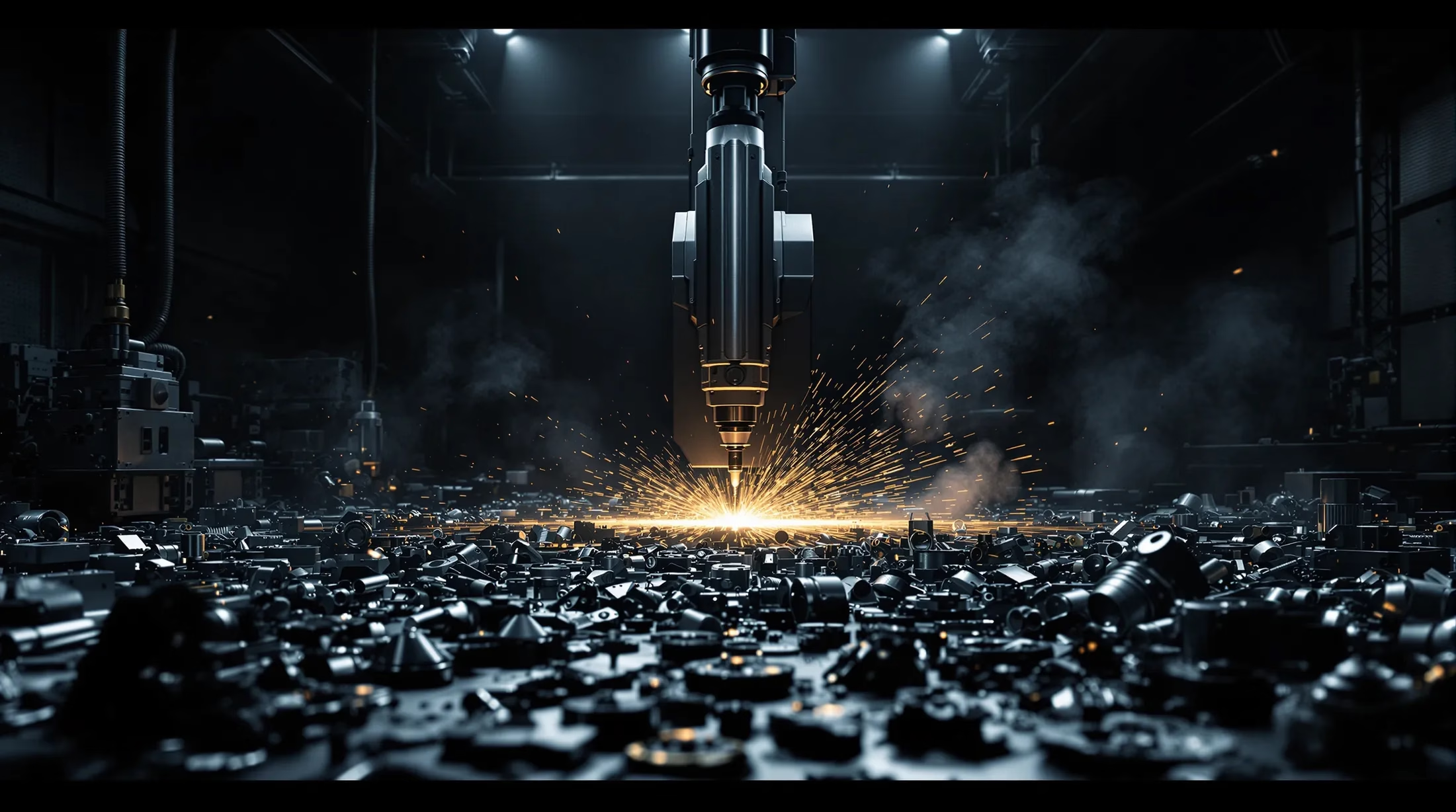
EDM Machining: Understanding Electrical Discharge Machining Techniques
Discover the revolutionary world of Electrical Discharge Machining (EDM), a cutting-edge manufacturing process that’s transforming precision engineering. This comprehensive guide explores how EDM technology achieves exceptional accuracy in metalworking through innovative electrical discharge techniques.
What is EDM Machining?
Electrical Discharge Machining (EDM) represents a sophisticated manufacturing process that employs electrical discharges or sparks to remove material from workpieces with unprecedented precision. Unlike traditional cutting methods, EDM operates without physical contact, effectively machining even the hardest metals while creating complex shapes and intricate details that would be impossible through conventional means.
The process operates by generating rapid electrical discharges between an electrode and workpiece, both submerged in dielectric fluid like paraffin or kerosene. These controlled sparks create localized temperatures of up to 12,000°C, melting or vaporizing material without imposing mechanical stress – making it ideal for delicate components.
The Basics of Electrical Discharge Machining
The EDM process relies on electroerosion, where material removal occurs through discrete electrical discharges. The fundamental components and process include:
- Electrode positioning with a precise gap from the workpiece
- Dielectric fluid immersion for both components
- Voltage application exceeding the fluid’s dielectric strength
- Formation of plasma channels creating controlled sparks
- Microsecond-duration discharges removing minimal material
The dielectric fluid performs multiple crucial functions, including electrical insulation, spark energy focusing, debris removal, and component cooling. This precise process repeats thousands of times per second, achieving micron-level accuracy in creating complex features.
History and Evolution of EDM
The journey of EDM technology spans several centuries, marked by significant milestones:
- 1770s – English scientist Joseph Priestley documents electrical discharge effects on metals
- 1940s – Soviet scientists Boris and Natalya Lazarenko develop the first controlled EDM process
- 1950s-1960s – Introduction of servo-controlled systems and transistorized power supplies
- 1970s-1980s – Implementation of CNC systems and wire EDM technology
- Modern era – Integration of sophisticated computer controls and automated systems
Types of EDM Machining Techniques
EDM encompasses three primary techniques, each designed for specific applications and offering unique capabilities. These specialized methods form the foundation of modern electrical discharge machining practices, utilizing controlled electrical sparks for material erosion while varying in implementation, equipment, and applications.
Wire Cut EDM
Wire Cut EDM utilizes a thin, continuously moving wire electrode to achieve exceptional precision in cutting conductive materials. Key characteristics include:
- Wire materials: brass, copper, or zinc-coated brass
- Wire diameter: 0.1 to 0.3mm
- Precision capability: ±0.001mm tolerance
- Advanced features: 5-axis machining capabilities
- Applications: extrusion dies, punch and die components, precision parts
This technique excels in creating intricate 2D and 2.5D profiles while producing stress-free components, particularly valuable for working with delicate or pre-hardened materials.
Sinker EDM
Sinker EDM, also known as Ram EDM or cavity-type EDM, employs a precisely shaped electrode that descends into the workpiece to create a negative impression. The process takes place with both the electrode and workpiece submerged in dielectric oil, which serves three critical functions:
- Electrical insulation between components
- Cooling of the machining area
- Removal of eroded material particles
- Prevention of thermal damage
- Enhancement of machining precision
The distinctive capabilities of Sinker EDM enable the production of complex three-dimensional cavities with exceptional precision. Modern systems incorporate orbital movement capabilities, allowing simpler electrodes to create intricate geometries through programmed patterns. This advancement significantly reduces electrode production costs while improving overall efficiency.
Hole Drilling EDM
Hole Drilling EDM represents the pioneering electrical discharge machining technique, utilizing tubular electrodes with internal flushing channels for direct dielectric fluid delivery. This specialized process achieves remarkable precision in creating holes with the following specifications:
- Diameter range: 0.1mm to 12mm
- Aspect ratios exceeding 20:1 (depth-to-diameter)
- Perfect straightness regardless of hole depth
- Superior surface finish quality
- Capability to process hardened materials
This technique proves invaluable in manufacturing critical components such as gas turbine blade cooling channels, fuel injection nozzles, and precision medical devices. The process often serves as a preliminary step for Wire EDM operations, creating access holes for wire threading in enclosed cavities.
Materials Suitable for EDM Machining
EDM technology excels in processing electrically conductive materials that challenge conventional machining methods. The process particularly demonstrates its value when working with materials exhibiting extreme work hardening characteristics, such as austenitic stainless steels and titanium alloys.
| Material Category | Common Applications |
|---|---|
| Tool Steels | Dies, molds, cutting tools |
| Titanium Alloys | Aerospace components, medical implants |
| Tungsten Carbide | Cutting tools, wear-resistant parts |
| Superalloys | Turbine components, high-temperature applications |
Machining Hard Materials
EDM revolutionizes the manufacturing of components from exceptionally hard materials, particularly those with hardness values approaching diamond, such as tungsten carbide. The process enables precise shaping of materials with Rockwell hardness exceeding 60 HRC, facilitating the creation of precision dies and molds after heat treatment without dimensional changes.
EDM in the Aerospace and Automotive Industries
The aerospace sector relies heavily on EDM for manufacturing critical components from high-performance alloys. The technology proves essential for creating precise cooling holes in turbine blades and complex geometries in structural components without introducing mechanical stress.
In automotive manufacturing, EDM technology enables the production of high-precision tooling for mass production processes, including injection molds, die-casting tools, and fuel injector components with microscopic precision holes. The process’s ability to maintain tight tolerances and create complex internal features directly contributes to improved component performance and extended service life.
Advantages and Disadvantages of EDM Machining
Electrical Discharge Machining delivers unique capabilities beyond conventional machining processes. This non-contact thermal erosion process excels at producing complex geometries with exceptional precision, particularly in hard materials that would challenge traditional cutting tools. EDM creates parts with minimal mechanical stress, eliminating workpiece deformation during fabrication—crucial for delicate or intricate components.
- Exceptional precision for complex geometries
- Minimal mechanical stress during processing
- Ability to work with extremely hard materials
- No workpiece deformation during fabrication
- Ideal for delicate component production
However, manufacturers must weigh several significant trade-offs. The process operates considerably slower than conventional machining, with material removal rates far below turning or milling operations. EDM systems demand higher initial investment and operational costs compared to traditional machine tools. The requirement for electrically conductive materials restricts its application, making it unsuitable for most ceramics, plastics, or glass without special modifications.
Benefits of Using EDM
- Achieves tolerances of ±0.0002″ (±0.005mm) in production
- Creates sharp internal corners and deep narrow slots
- Produces perfect undercuts and internal geometries
- Machines pre-hardened materials without distortion
- Enables thin-walled section machining
- Eliminates post-machining heat treatment needs
The absence of cutting forces allows for machining extremely thin-walled sections and delicate parts that would typically flex, warp, or break under conventional cutting pressures. This capability proves particularly valuable in toolmaking applications, where components must maintain precise dimensions after achieving their final hardness.
Challenges and Limitations
| Limitation | Impact |
|---|---|
| Slow Material Removal | Cubic inches per hour vs. minutes in conventional machining |
| Surface Integrity | Heat-affected zone and recast layer requiring additional finishing |
| Operational Costs | Higher energy consumption and consumable expenses |
| Environmental Concerns | Special handling and disposal of dielectric fluids required |
Technological Parameters and Setup
Mastering EDM requires comprehensive understanding of complex technological parameters that drive the process. These parameters critically influence machining outcomes, from surface finish quality to material removal rates. Many operators face optimization challenges due to limited access to detailed information about generators and control systems, often protected as proprietary information by manufacturers.
Critical Parameters for Optimal Performance
- Current intensity – affects material removal rate and surface finish
- Pulse duration – determines spark duration and crater depth
- Frequency – controls discharge rate per second
- Gap voltage – establishes potential difference for discharge
- Off-time – enables debris flushing and insulation restoration
- Duty cycle – balances on-time to total cycle time ratio
Modern EDM machines incorporate adaptive control systems for real-time parameter adjustment. However, understanding these fundamental relationships remains essential for effective troubleshooting and optimization. The interplay between parameters varies significantly across different materials, requiring careful adjustment and balancing for each specific application.
Setting Up an EDM Machine
Proper EDM machine setup requires meticulous workpiece preparation and positioning. The workpiece must be firmly secured to prevent even microscopic movements that could compromise dimensional accuracy. For optimal performance, specific setup requirements vary between EDM types:
- Sinker EDM – requires precise electrode alignment with the workpiece to ensure uniform spark distribution
- Wire EDM – demands proper wire threading and tension calibration to prevent deflection or breakage
- Workpiece mounting – requires secure fixturing to maintain absolute stability
- Gap distance – must be set between 0.01mm and 0.05mm depending on application requirements
- Dielectric system – needs proper filtration and pressure settings for optimal performance
| Setup Component | Critical Requirements |
|---|---|
| Dielectric Fluid System | Proper filtration, appropriate pressure, consistent flow rate |
| Gap Distance | 0.01mm – 0.05mm initial setting |
| Monitoring Systems | Real-time parameter tracking and adjustment capability |
| Debris Management | Efficient flushing system to prevent secondary discharges |
The dielectric fluid system plays a crucial role in maintaining stable machining conditions. Proper filtration removes contaminants that could interfere with the electrical discharge process, while appropriate pressure and flow rates ensure efficient debris removal from the cutting zone. Modern EDM systems incorporate sophisticated monitoring capabilities, enabling operators to track these parameters in real-time and make immediate adjustments when necessary, ensuring consistent production of high-precision components.