
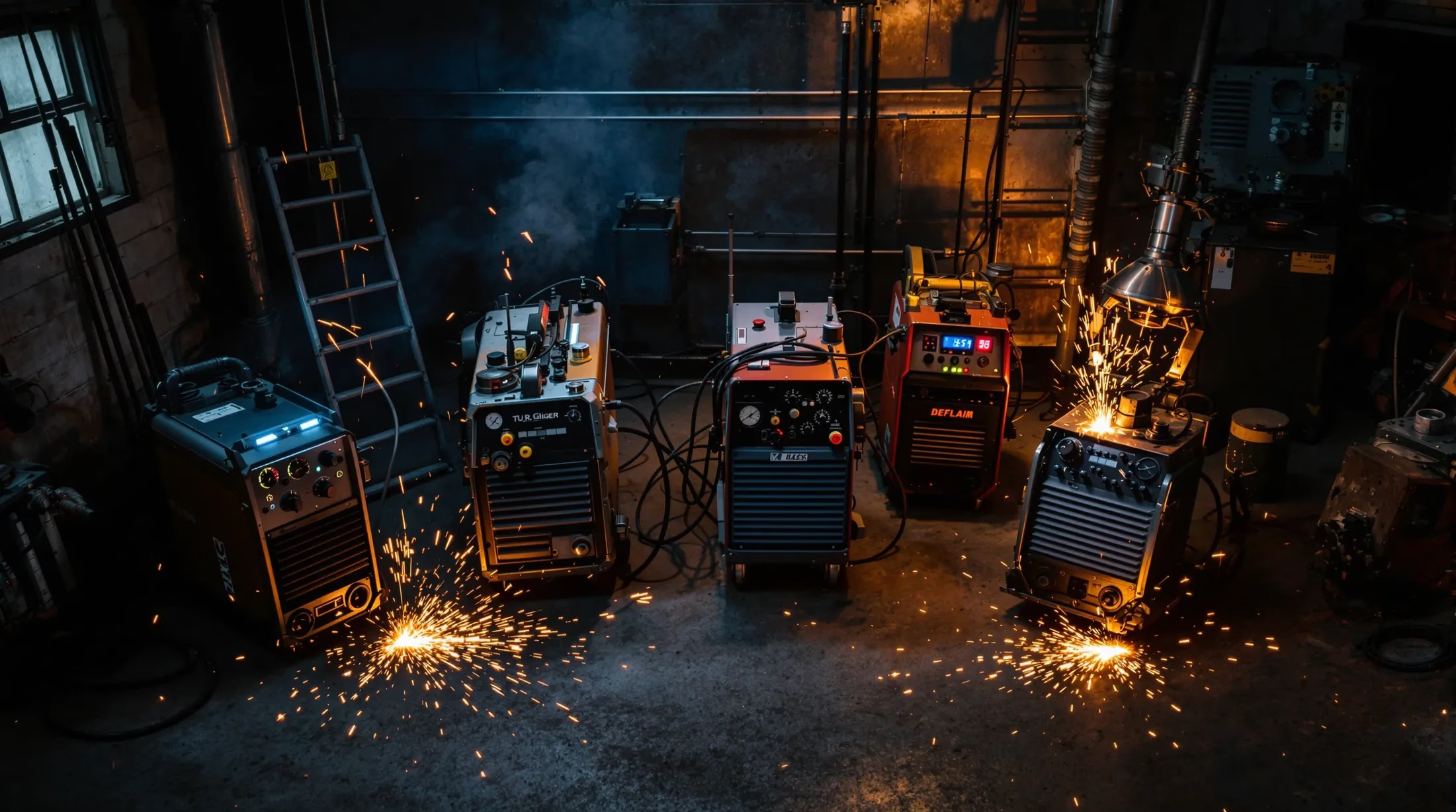
Welder: Essential Guide to Choosing the Right Welding Equipment
Embarking on your welding journey requires understanding the right equipment for your specific needs. Whether you’re a professional fabricator or a DIY enthusiast, this comprehensive guide will help you navigate through various welding technologies and make an informed decision for your projects.
Understanding Different Types of Welders
Welding technology encompasses various methods for joining metals, each with unique characteristics suited for specific applications. The choice of welder depends primarily on the energy source and technique used during the welding process.
- MIG (Metal Inert Gas) – Ideal for beginners and versatile applications
- TIG (Tungsten Inert Gas) – Perfect for precision work
- Stick welding – Suitable for outdoor and rough conditions
- Plasma cutters – Essential for precise metal cutting operations
MIG Welders: Features and Applications
MIG welding (GMAW) utilizes a continuous wire electrode fed through a welding gun. The process creates an electric arc that melts the wire, forming a weld pool that fuses with base metals. A shielding gas protects the molten metal, ensuring clean, strong welds.
Models like the MIGMAX 215 feature synergic functions with automatic settings, making them particularly suitable for:
- Industrial applications
- Manufacturing processes
- Automotive repair
- Construction projects
- Medium to thick material joining
TIG Welders: Precision and Control
TIG welding distinguishes itself through exceptional precision using a non-consumable tungsten electrode. The TIG 200 and similar models offer both AC and DC capabilities, making them versatile for various materials:
| Current Type | Best For |
|---|---|
| AC | Aluminum, Magnesium |
| DC | Steel, Stainless Steel |
Stick Welders: Versatility and Strength
Stick welding (SMAW) employs a flux-coated consumable electrode. Its advantages include:
- Excellent performance in outdoor conditions
- Ability to weld dirty or rusty metals
- Greater adaptability to challenging environments
- Cost-effective equipment
- High portability
Plasma Cutters: Cutting Edge Technology
Plasma cutters create a high-velocity jet of ionized gas that reaches temperatures exceeding 20,000°F. These systems excel in:
- Clean, accurate cuts
- Minimal heat-affected zones
- Versatility across multiple metals
- Complex pattern cutting
- Rapid cutting operations
Choosing the Right Welding Equipment for Your Needs
The selection of appropriate welding equipment significantly impacts work quality and productivity. Consider these essential factors when making your choice:
Factors to Consider When Selecting a Welder
| Factor | Consideration |
|---|---|
| Material Thickness | Under 1/4 inch: 140-amp MIG; Structural steel: 200+ amp |
| Power Supply | Home: 120V; Professional: Three-phase power |
| Duty Cycle | Professional: 60%+; Budget models: 20-30% |
| Skill Level | Beginners: Preset functions; Experienced: Adjustable parameters |
Top Brands in Welding Equipment
Miller Electric maintains its reputation through exceptional quality and innovative Auto-Set™ technology, streamlining machine setup processes. While their equipment commands premium prices, it delivers the reliability and performance that professional welders require. Lincoln Electric offers comprehensive solutions from entry-level to industrial machines, with their PowerMIG series effectively balancing accessibility and professional capabilities.
- ESAB – Feature-rich machines at competitive prices, notably the versatile Rebel series for mobile contractors
- Hobart – Strong performance in entry to mid-level equipment with proven reliability
- Everlast – Accessible pricing for feature-dense inverter technology
- Fronius – Specialized in high-end digital welding solutions
- Miller Electric – Premium quality with innovative Auto-Set™ technology
- Lincoln Electric – Comprehensive range with excellent PowerMIG series
Welding Safety Gear and Consumables
Safety in welding demands appropriate protective equipment against intense light, heat, sparks, fumes, and electrical hazards. Quality safety gear represents both a regulatory requirement and a fundamental aspect of professional welding practice. Alongside safety equipment, welding consumables form the core of successful operations, including electrodes, filler wires, and shielding gases, plus components requiring regular replacement.
Essential Safety Gear for Welders
- Auto-darkening welding helmets (shade settings 9-13) with safety glasses underneath
- Heavy-duty leather welding gloves with heat-resistant properties
- Flame-resistant clothing (100% cotton or specialized FR material)
- Leather aprons and sleeve protectors
- Steel-toed boots for protection against falling objects
- Respiratory protection (from disposable masks to PAPRs)
- Ear protection for noisy environments
- Welding blankets for spark protection
- Protective head coverings
Understanding Welding Consumables
| Welding Type | Consumables | Common Specifications |
|---|---|---|
| MIG | Solid wires | 0.023″ to 0.045″ diameter (ER70S-6, ER308L, ER4043) |
| Stick | Flux-coated electrodes | E6010, E6011, E7018 |
| TIG | Tungsten electrodes and filler rods | Pure, 2% thoriated, 2% ceriated |
Advanced Welding Technologies
Recent technological advancements have revolutionized welding practices, introducing sophisticated electronics and intelligent systems that enhance performance while reducing operator fatigue. Inverter technology has transformed power supply systems, creating lighter, more energy-efficient machines with superior arc quality and stability.
These innovations extend beyond basic equipment to include automated systems, sophisticated monitoring tools, and enhanced safety features. The advancements benefit diverse industries from automotive and aerospace to construction and fabrication, delivering improved productivity, quality, and safety standards.
Fume Extraction Systems for a Safe Environment
Welding fume extraction systems represent a vital component in modern welding safety technology, effectively addressing airborne hazards in welding operations. These sophisticated systems capture harmful particles and gases at their source, preventing them from reaching the welder’s breathing zone. The technology spans from compact portable units ideal for small workshops to comprehensive facility-wide installations with centralized filtration systems.
- High-efficiency particulate air (HEPA) filters for microscopic particle removal
- Activated carbon components for chemical vapor elimination
- Source-capture systems with articulated arms for precise positioning
- Integrated solutions built into welding guns
- Automatic filter cleaning mechanisms
- Digital monitoring systems for maintenance alerts
Implementation of proper fume extraction delivers multiple benefits, from protecting welders against respiratory issues and long-term health complications to ensuring compliance with occupational safety regulations. These systems significantly enhance workplace air quality, offering superior capture efficiency compared to traditional ventilation methods.
Welding Intelligence: Optimizing Your Welding Process
Welding intelligence systems transform traditional welding operations into data-driven, highly optimized processes through comprehensive monitoring and analysis capabilities. These advanced platforms continuously track essential parameters in real-time, providing immediate feedback and actionable insights.
| Monitored Parameters | System Benefits | Implementation Features |
|---|---|---|
| Current and voltage levels | Quality improvement | Real-time monitoring |
| Wire feed speed | Cost reduction | Cloud connectivity |
| Gas flow rates | Productivity gains | Remote management |
| Temperature variations | Waste minimization | Adaptive control |
Modern welding machines incorporate built-in intelligence capabilities with user-friendly interfaces and cloud connectivity, enabling remote monitoring across multiple locations. This technology stands at the forefront of Industry 4.0, transforming welding operations through data-driven optimization and comprehensive quality assurance documentation.